GST IN : 10HSSPK9706A1ZR

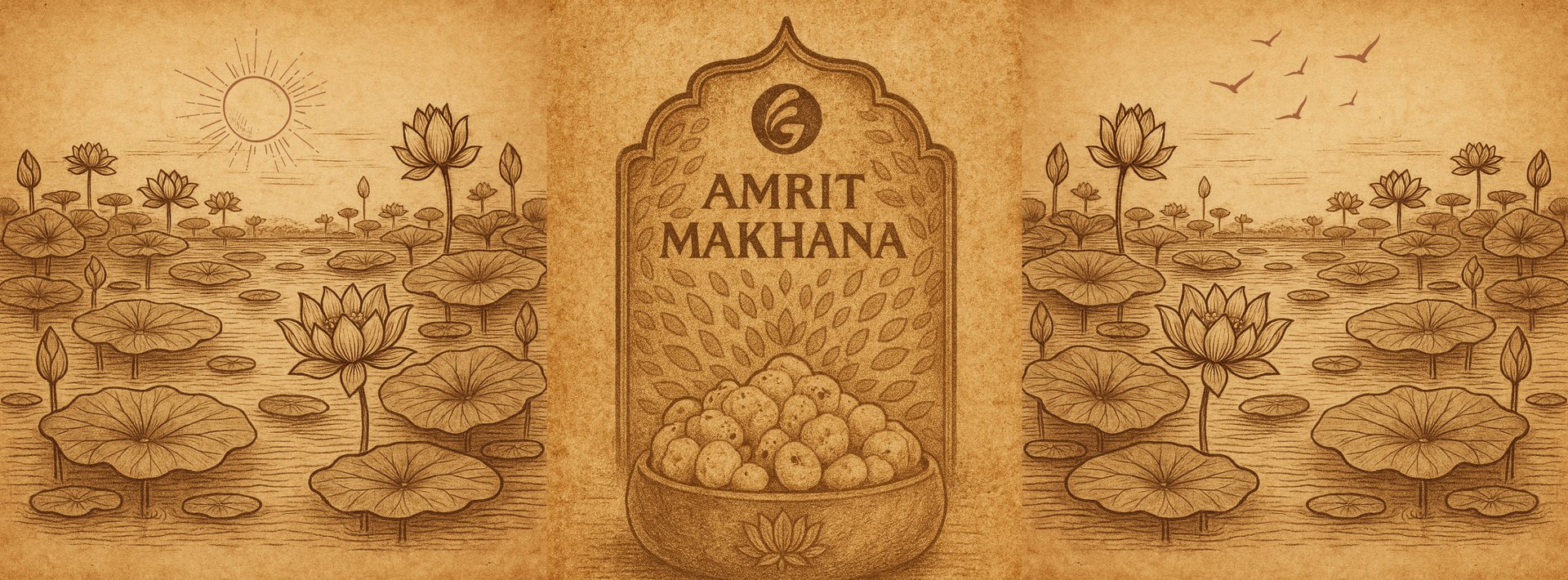

The Ancient Superfood
Makhana, also called fox nuts or lotus seeds, has been cultivated for over 2,500 years, especially in the Mithila region of Bihar, India, which is still the world’s largest producer.
In ancient times, Makhana was considered a sacred offering in temples and a symbol of purity. It appears in Ayurvedic texts, where it was praised for boosting strength, digestion, and vitality.
Traditionally, farmers collected the seeds by hand from lotus ponds, drying and roasting them using age-old techniques passed through generations. Though once used mainly for fasting food and Ayurvedic medicine, Makhana has now evolved into a global superfood, valued for its nutrition, crunch, and natural purity.
"A Superfood Rooted in India’s Ancient Traditions"
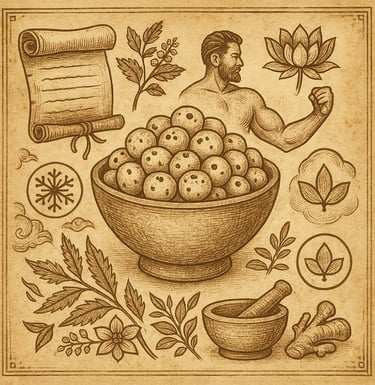
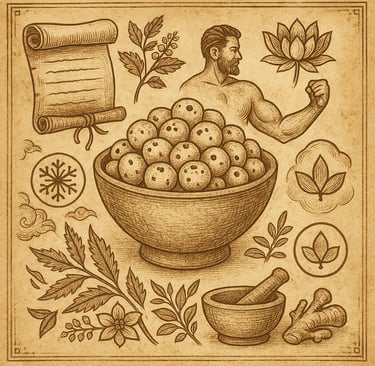
Makhana in Ancient Texts & Ayurveda
Ayurvedic texts describe lotus seeds as “sheetal” (cooling), “balya” (strength-giving), and “sattvic” (pure).
They were believed to:
Strengthen the digestive system
Improve vitality
Calm the mind
Balance the three doshas
Ayurvedic practitioners recommended makhana for children, pregnant women, and sages who required sustained, pure energy during meditation.
"The Ancient Legacy of Makhana — A Gift from Our Ancestors"
The Sacred Significance of Makhana
Because the lotus is associated with gods and goddesses — especially Lakshmi, the symbol of wealth and purity — makhana became a sacred ingredient used during fasting, pujas, temple offerings, and holy feasts.
Its natural white color, purity, and lightness aligned perfectly with traditional spiritual practices.
"Tracing the Ancestral Origins of Makhana"
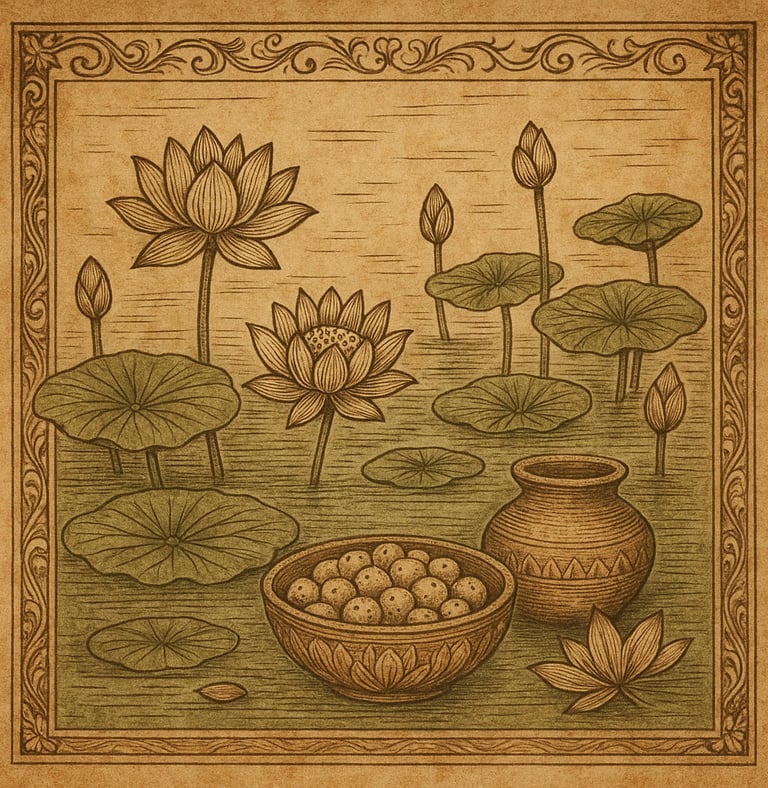
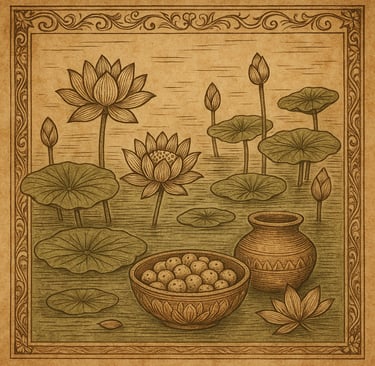
Traditional Makhana Farming & Harvesting Methods
For centuries, makhana has been harvested using techniques that require skill, patience, and deep knowledge of water ecosystems.
Ancient cultivation involved:
Preparing natural ponds
Allowing lotus plants to grow naturally
Hand-collecting seeds from the water
Drying, roasting, and popping them using clay stoves
The popping technique — where seeds burst into light white puffs — is considered an art form passed down through ancestral families.
"Harvested Through Generations: The Heritage Story of Makhana"
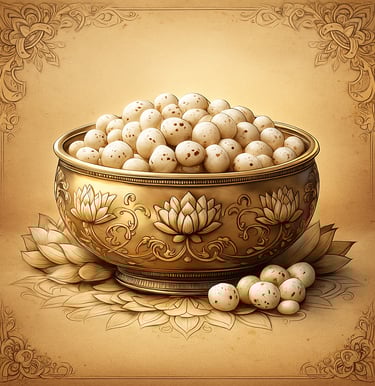
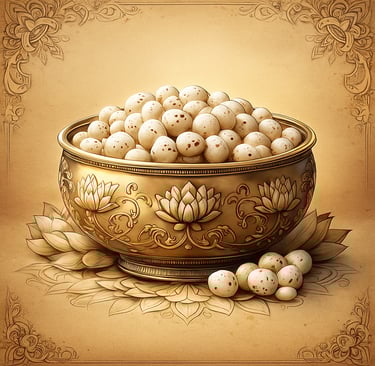
Makhana in Royal & Cultural Kitchens
In ancient royal kitchens, makhana was treated as a premium ingredient. It was used to prepare:
Royal kheer
Rich gravies
Festive sweets
Snacks for kings and queens
The nobility valued makhana because it was rare, manually harvested, and nutritionally rich — a true “royal treat.”
"The Forgotten Royal Snack of Ancient India: Makhana"
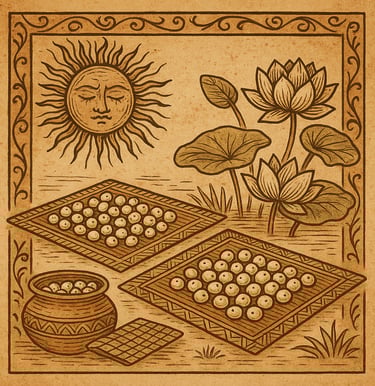
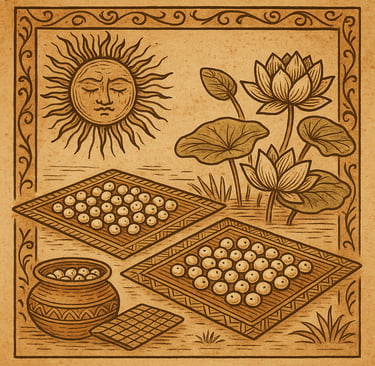
Evolution Through Generations
Although modern machinery has entered the process, many families in Bihar still follow centuries-old methods:
Sun-drying
Manual grading
Clay-pan roasting
Hand-popping
This blend of ancient practice and modern demand keeps makhana’s heritage alive.
"Makhana and Its Sacred Place in Ancient Culture"
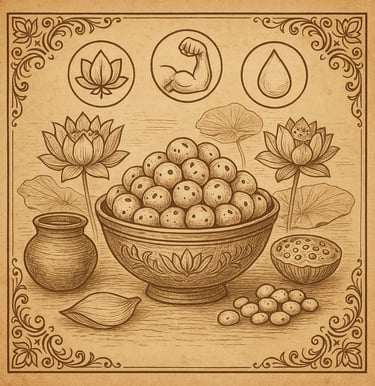

Ancient Nutritional Wisdom
Our ancestors recognized the power of makhana long before the term “superfood” existed.
Its natural qualities include:
High protein
Low fat
Gluten-free
Antioxidant rich
Easily digestible
It was often carried during long journeys, fasts, and rituals because it provides clean, sustained energy.
"The Age-Old Wisdom Behind Today’s Favorite Superfood — Makhana"


Foxnut Global. Block Kasba, Purnea Durgapur,Purnia,Bihar,India-854325
Mon - Fri, 9am-9pm
Sat - Sun, 9am-2pm